Good to see you
Welcome to Dulux Trade
Terms and Conditions
Thanks! for registering
Successfully registered, please login
Registration complete
Forgotten your password?
Please enter email address associated to your account
Change Password
Password changed successfully.
Request sent!
Would you spare a minute to answer 3 questions
Registration complete
Successfully registered, please login
Delete Account
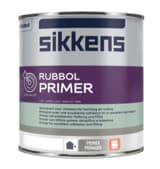
Sikkens Rubbol Primer
-
Excellent absorption and adhesion to timber
-
Provides a perfect surface for Rubbol opaque coatings
-
Excellent opacity
-
Good levelling properti
-
Finish Matt
-
Coverage 14-15 m²/L
-
Drying Time 2-3 hours
-
Recoatable 18 hours
-
Composition Solvent-based
-
Excellent Adhesion
Product Description
Application Description
eradicated using a suitable solvent. The moisture content of the timber must not exceed 18%. This figure will be 14% or
lower for interior timbers. Degrease any exposed bare timber surface by wiping with a cloth dampened in a suitable solvent.
Any hard crystallised resin at the surface of the timber should be removed with a scraper. Remaining resinous residues may
be removed using a suitable solvent. Knotting may be used to reduce extractive discolouration, however, knotting is not
always fully effective in “sealing in” resin. In addition, the adhesion of subsequent coatings may be impaired. New Timber : Where a superficial application of preservative to softwood and hardwood is deemed necessary, such as timbers in Durability Class 3 or lower, use Cuprinol Wood Preserver Clear (BP). For Class 4 (in ground contact) and 5 (marine) use pre-treated wood specific for these conditions. Preservative pre-treatments must be fully dry before the application of Rubbol Primer Plus. Do not use on substrates which have had water-repellent preservative pre-treatments applied. Where possible, the first coat should be applied all round prior to fixing.Only use non-ferrous screws, nails and fixings.
Technical & Safety Documentation
Tips & Advice
-
1. Preparing the SurfacesTimber surface must be abraded, clean and dry, with dust, dirt, wax and grease removed. Mould and algal growth must be
eradicated using a suitable solvent. The moisture content of the timber must not exceed 18%. This figure will be 14% or
lower for interior timbers. Degrease any exposed bare timber surface by wiping with a cloth dampened in a suitable solvent.
Any hard crystallised resin at the surface of the timber should be removed with a scraper. Remaining resinous residues may
be removed using a suitable solvent. Knotting may be used to reduce extractive discolouration, however, knotting is not
always fully effective in “sealing in” resin. In addition, the adhesion of subsequent coatings may be impaired.
Where a superficial application of preservative to softwood and hardwood is deemed necessary, such as timbers in Durability Class 3 or lower, use Cuprinol Wood Preserver Clear (BP). For Class 4 (in ground contact) and 5 (marine) use pre-treated wood specific for these conditions. Preservative pre-treatments must be fully dry before the application of Rubbol Primer Plus. Do not use on substrates which have had water-repellent preservative pre-treatments applied. Where possible, the first coat should be applied all round prior to fixing.
Only use non-ferrous screws, nails and fixings.
Base stained/primed : Denib using a fine grade nylon abrasive pad or a fine grade (P240 or finer) wet or dry silicon carbide abrasive paper, in the direction
of the grain. Do not break through the surface coating. Remove all dust.
Note: Where there is localised damage, or deterioration has occurred as a result of exposure of the factory coating for longer than 3 months, affected areas should be thoroughly sanded back to a sound substrate.
All damaged or decayed timber must be removed and replaced, cutting at least 25mm into sound timber. When splicing in new sections consider whether the timber species’ natural durability is sufficient. Brush apply two coats of Cuprinol Wood
Preserver Clear (BP) to saturation. Thoroughly treat timbers, especially end grain sections, and ensure they are fully dry before splicing in. Secure with non-ferrous fixings and fill all voids surrounding the spliced-in area with a suitable repair compound such as Dry-Flex from Repair Care -
2. After useCleaning After Final Use- Clean brushes and rollers immediately after final use to reuse them for future projects, saving you money and reducing waste. Cleaning Steps- 1. Remove Excess Paint- Scrape off leftover paint into a container for reuse. 2. Use Brush Cleaner- Use Polycell Brush Cleaner to clean brushes and rollers. 3. Reuse Brush Cleaner- Allow the paint solids to settle and reuse the cleaner by pouring the clear liquid into another container. 4. Dry Naturally- Let tools air-dry and store in a dry, dust-free area. Dispose Responsibly- Dispose of the remaining solids and used brush cleaner at a hazardous waste facility. Do not pour any solvent-based paint, brush cleaner or washings down the drain or onto the ground. Do not flush paint down the drain, including when cleaning painting tools
-
3. StoringStoring & Responsible Disposal Do not use or store in extreme temperatures and protect from frost. Whenever possible, reuse, recycle, or donate leftover paint. Find local services at recyclenow.com. If no Community RePaint service is nearby, consider advertising paint locally—many good causes need it to brighten community spaces. Dispose Responsibly- Never pour paint or waste washings down drains or sinks. Follow instructions at recyclenow.com to recycle empty packs. Reuse Roller Cages- Remove sleeves and store cages in a dry, dust-free place. If brushes or sleeves cannot be cleaned or reused, dispose of them in general waste to avoid recycling issues. Paint Washings- Collect used brush cleaner in a container; don't pour it into drains or on the ground. Let solids settle, pour off clear liquid into another container for reuse or disposal. Dispose of remaining solids and used cleaner at a hazardous waste facility. Do not flush paint down drains, including when cleaning tools.
How much paint do I need?
More than one wall to paint? Try our advanced paint calculator
Measure the height and length of the surface you want to paint (in metres or centimetres).

Your Measurements:
{{!-- This value will be injected with JavaScript --}}
Amount needed:
{{!-- This value will be injected with JavaScript --}}
Actual coverage will depend on the conditions of the surface. If the colour change is strong, more coats may be required.
Add a new job
Add a new job
Edit job
Delete job
Are you sure? All notes, photos and saved items will be deleted.
Save Color
Save to My Workspace
Add to job

Sikkens Rubbol Primer
Save to My Workspace