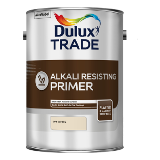
For use on interior and exterior masonry surfaces that may contain alkalis
Your Measurements:
Amount Needed:
For the best result we recommend to use
{coatAmount} for {productTitle}
Key benefits
For plaster and masonry surfaces
Seals fresh, alkaline surfaces
Blocks stains such as nicotine and fire damage
Solvent-based
Technical Information
Finish
Matt
Coverage
Up to 9m2 per litre
Drying Time
6-10 hours
Recoatable
16-24 hours
Thinning
White Spirit
10
Composition
Solvent-based
Product Features
Fantastic Dulux Quality
Product Description
Dulux Trade Alkali Resisting Primer is a solvent-based primer particularly suitable for use on interior and exterior masonry surfaces, including plaster, that may contain alkalis. It is also highly recommended for its outstanding stain sealing properties, and will help seal fire damaged surfaces after very thorough cleaning and rinsing. Can also be used to prime surfaces treated with fire retardant chemicals.
Application Description
Application: Brush only. For Health and Safety reasons related to all solvent-based paints, spray application is not recommended. STIR THOROUGHLY BEFORE USE. After suitable surface preparation, apply 1 coat of Dulux Trade Alkali Resisting Primer to bare or stained surfaces.Finish with an appropriate Dulux Trade paint system
Technical & Safety Documentation
Flammable liquid and vapour. May cause drowsiness or dizziness. Harmful to aquatic life with long lasting effects.Contains isobutyl methacrylate. May produce an allergic reaction. Repeated exposure may cause skin dryness or cracking. Contains Hydrocarbons, C9-C11, n-alkanes, isoalkanes, cyclics, less than 2% aromatics Hydrocarbons,C9,aromatics
To get the best results, ensure surfaces to be painted are sound, clean and dry (new surfaces particularly must be fully dry). See Dulux Trade Datasheet 301 for full information before use, available free on request by telephoning 0333 222 70 70 or visiting duluxtrade.co.uk. Before surface preparation, read the Health & Safety information about old lead paints.
2.
After use
Cleaning After Final Use- Clean brushes and rollers immediately after final use to reuse them for future projects, saving you money and reducing waste. Cleaning Steps- 1. Remove Excess Paint- Scrape off leftover paint into a container for reuse. 2. Use Brush Cleaner- Use Brush Cleaner to clean brushes and rollers. 3. Reuse Brush Cleaner- Allow the paint solids to settle and reuse the cleaner by pouring the clear liquid into another container. 4. Dry Naturally- Let tools air-dry and store in a dry, dust-free area. Dispose Responsibly- Dispose of the remaining solids and used brush cleaner at a hazardous waste facility. Do not pour any solvent-based paint, brush cleaner or washings down the drain or onto the ground. Do not flush paint down the drain, including when cleaning painting tools
3.
Storing
Storing & Responsible Disposal
Do not use or store paint in extreme temperatures and protect from frost.
Whenever possible, reuse, recycle, or donate leftover paint. Find local services at recyclenow.com. If no Community RePaint service is nearby, consider advertising paint locally—many good causes need it to brighten community spaces.
Dispose Responsibly- Never pour paint or waste washings down drains or sinks. Follow instructions at recyclenow.com to recycle empty packs.
Reuse Roller Cages- Remove sleeves and store cages in a dry, dust-free place.
If brushes or sleeves cannot be cleaned or reused, dispose of them in general waste to avoid recycling issues.
Paint Washings- Collect used brush cleaner in a container; don't pour it into drains or on the ground. Let solids settle, pour off clear liquid into another container for reuse or disposal. Dispose of remaining solids and used cleaner at a hazardous waste facility.
Do not flush paint down drains, including when cleaning tools.